If you’re from Egbe or anywhere in Yagbaland, chances are you’ve heard whispers—perhaps even passionate retellings—about a mysterious spring along Patigi Road known as Amo. But what if that water isn’t just water? What if a spirit lives beneath its calm surface? A woman. A goddess. A legend.
As the convener of Egbe Mekun Carnival, part of my mission is to document, preserve, and celebrate the sacred traditions that define us as a people. Among them, IFON stands out—a mysterious rite rooted in love, pain, and transformation.
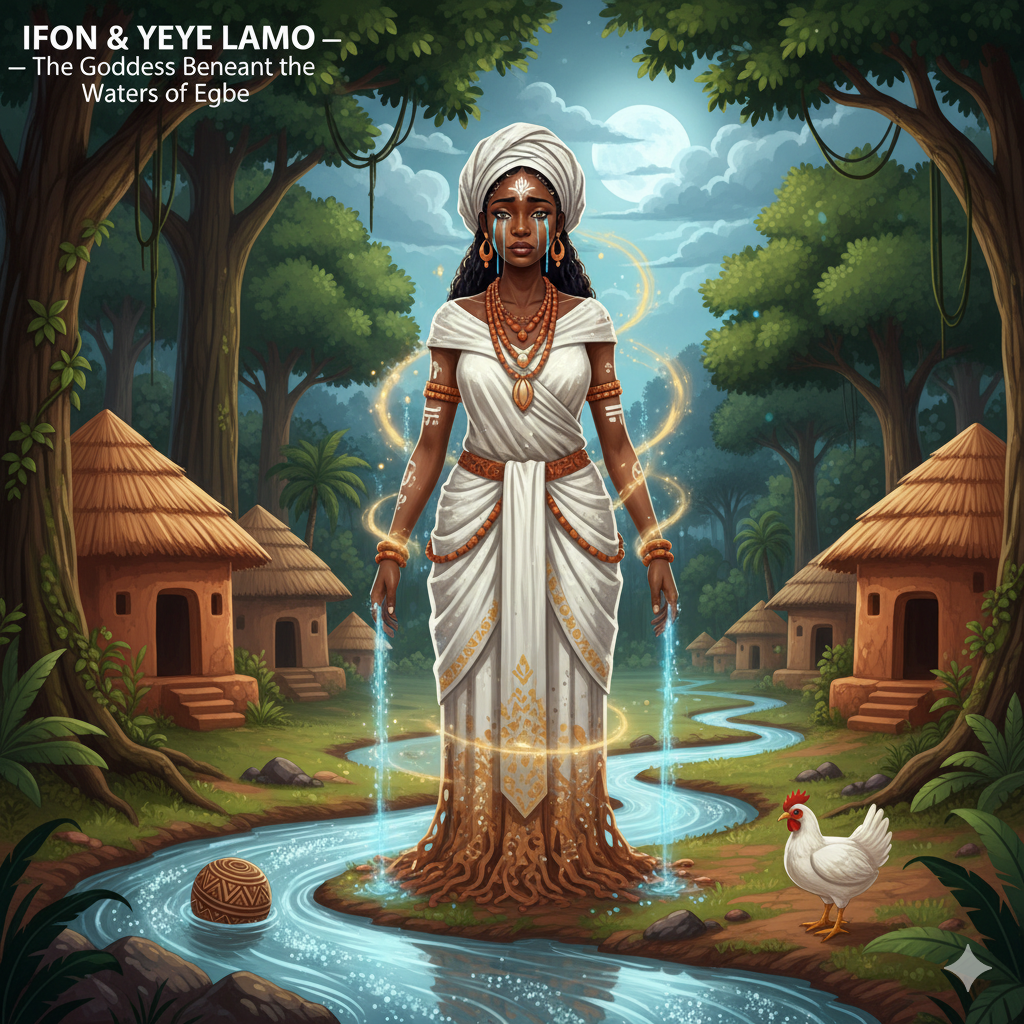
The Woman Who Sank Into the Ground
Long ago, in the heart of Egbe, lived a gentle and faithful woman named Yeye Lamo. She was happily married, but after over twenty years without a child, her husband gave in to despair and took another wife—one who soon bore him six children.
What began as a peaceful home turned bitter. Mocked by her husband’s new wife and her children, and accused by her husband of witchcraft, Yeye Lamo’s heart broke beyond repair.
One tragic day, after being insulted by her stepchildren, she cried out in anguish. As she wept, the ground beneath her began to open. Slowly, painfully, she sank into the earth—disappearing completely.
In her place, a spring of water emerged. The people called it Amo. But Yeye Lamo did not vanish silently—she left behind a curse: the family that wronged her would know endless sorrow.
And so it was.
The Birth of IFON
Years later, tragedy plagued the family. The junior wife became barren, and her daughters suffered in their marriages. Seeking answers, the elders consulted the oracle, which revealed that Yeye Lamo must be appeased.
Thus was born IFON, a sacred rite performed to honor her spirit and restore balance.
Some see IFON as appeasement. Others call it initiation into womanhood. For many, it is a spiritual rebirth—a time of inner cleansing, beauty, and connection to divine femininity.
What Happens During IFON
Traditionally, IFON lasted three months, though today it is often shortened to three days. During this period:
- The woman stays indoors, unseen by sunlight.
- She must not see her reflection—no mirrors, no shiny surfaces.
- Even when drinking water, she closes her eyes.
This time of seclusion is followed by beautification rituals using Osun—a red paste made from camwood. Bathing is done only at night, in silence and reverence.
Importantly, IFON has nothing to do with genital mutilation. It is not a harmful or physical act—it is a spiritual and cultural experience symbolizing renewal and womanhood.
Sacred Taboos
In Egbe, tradition warns that any woman who hasn’t undergone IFON must never eat roasted yam with palm oil. Elders also say fertility often increases after IFON, though beliefs may vary among families.
The Goddess of Amo Still Lives
Pilgrims who visit Amo Spring after completing IFON often report receiving a hen from the water. If the hen lays eggs and hatches chicks, they must return part of the brood to the spring as Yeye Lamo’s share—a symbol of gratitude and divine connection.
It’s also forbidden to catch or kill fish in the spring. Those who try, they say, invite Yeye Lamo’s wrath.
Some oral traditions claim that Yeye Lamo originally came from Ile-Ife, bringing the sacred spring with her—while her husband still resides there. Whether literal or symbolic, this belief ties Egbe to ancient Yoruba spiritual roots.
The Guardian of IFON
Every powerful tradition needs a guardian. In Egbe, that role belongs to the Ogbomoya—a wise, elderly woman who leads initiates through the IFON process, ensuring it remains authentic, respectful, and spiritually aligned.
A Living Culture
Though not every lineage in Egbe practices IFON today, it remains central to the Omo Ina Odi families and others who uphold traditional customs. Despite modernization, IFON endures—adapting, surviving, and reminding us of who we are.
As our world changes, we must continue to tell these stories—not only through festivals and songs but through words and memory.
Because Yeye Lamo is more than a myth.
She is a mirror of womanhood, resilience, and rebirth.
Final Thought
So, next time you pass the Amo Spring or hear someone mention IFON, remember:
It all began with a woman who loved deeply, was wounded deeply, and rose beyond pain to become eternal.
Culture is memory. IFON is ours.
Let’s keep telling her story.
📍 Egbe, Kogi State, Nigeria
✍️ By Temidayo John Tunde
📸 Cultural Feature – Okun Reporters
About The Author